Astroengineering Center UC (AIUC)
Radio Transients Lab
We study Fast Radio Bursts, pulsars and magnetars — and we build the radio telescopes and electronics to detect them, right here in Chile.

Flagship project
FRONTIERS
A compact array of 23 six-meter radio antennas to detect FRBs in the 1–2 GHz band — a low-cost, large-N small-D radio telescope designed and built locally, that will also work as a satellite ground station.
Learn more- Antennas
- 23
- Dish
- 6 m
- Band
- 1–2 GHz
- Team
- 23
What we do
From the sky to the signal chain
Radio transients
Fast Radio Bursts, pulsars and magnetars — from targeted searches and Phased ALMA observations of the Galactic Centre magnetar to FRB simulations.
RF & antenna design
Composite reflectors, L- and X-band feeds, complete RF chains and low-cost components manufactured locally in Chile.
Digital backends
FPGA / RFSoC receivers sampling at 5 GS/s, polyphase filter banks and real-time dedispersion to catch bursts as they arrive.
Data science
Machine-learning pipelines for detecting and classifying transients in large data streams, plus spectrum and site surveys.
Our people
Meet the team
Led by Marilyn Cruces, Assistant Professor (PUC) & Max Planck Partner Group Leader.

Marilyn Cruces
Group Leader
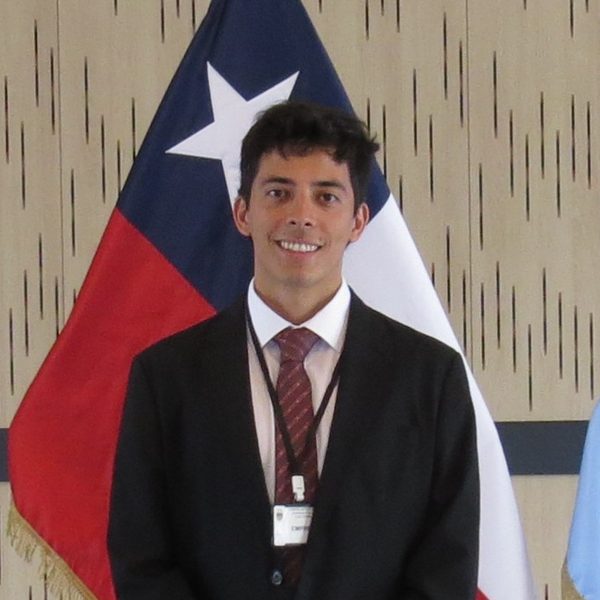
Javier A.
Antenna Design & DSP Team Leader
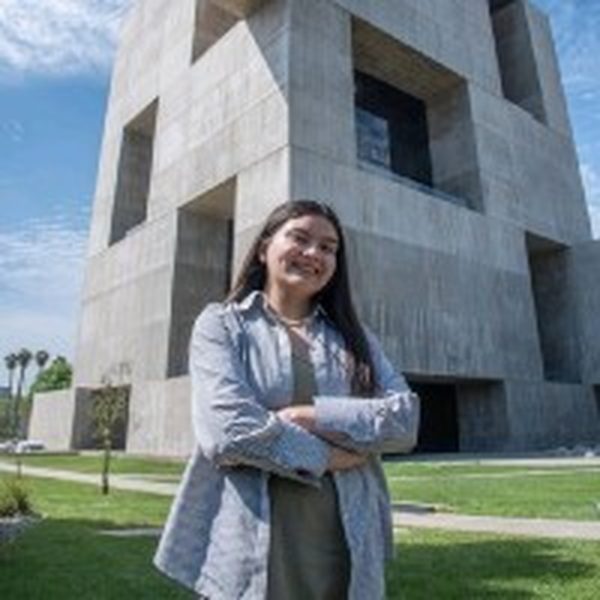
Josefina Vera
Antenna (RF) Design
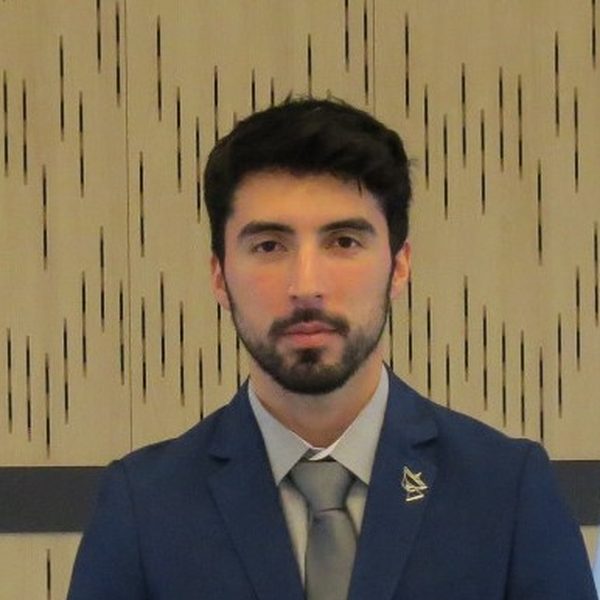
Benjamín Ruz
Antenna (RF) Design & Digital Signal Processing

Nicolás Seguel
Antenna (RF) Design

Etienne Cabiac
Digital Signal Processing

Agustina Berrios
Antenna (Mechanical) Design

Juan Esteban
Antenna (Energy Modelling) Design

Antonia Merdanevic
Antenna (Mechanical) Design
Affiliations
Where we work
Astroengineering Center UC (AIUC)
Home of the lab
Pontificia Universidad Católica de Chile
Host university
Max Planck Institute for Radio Astronomy
Max Planck Partner Group